Recent Posts

Blogger Tips and TricksLatest Tips And TricksBlogger Tricks
Showing posts with label Automobile. Show all posts

Apollo Tyres launches Vredestein brand

Apollo Tyres has announced the introduction of its premium European brand, Vredestein into India.
Vredestein, which is known for its designer and high- quality tyres, is entering India with tyre sizes of 15- to 20 inches, primarily catering to the luxury coupes, premium luxury saloons and SUVs, with top speeds up to 240 to 300kph These tyres, the company says, will complement Apollo’s existing product range in the passenger vehicle tyres space.
The Vredestein tyres being introduced currently are  Ultrac Sessanta, Ultrac SUV Sessanta, Ultrac Cento and Sportrac 5, all bearing the signature touch of renowned automobile designer, Giorgetto Giugiaro.
Commenting on the development, Onkar S Kanwar, chairman, Apollo Tyres, said: “India will benefit immensely from the globalisation efforts of the company. Our investments in R&D centres of excellence, positioning of the brand and other marketing initiatives will endear us more to the discerning Indian customers. A major differentiator for this 100-year-old brand, Vredestein, is its premium styling and ultra-high performance, the two most important factors considered by owners of luxury cars before buying a tyre.”
Vredestein tyres will be distributed through a hand-picked set of business partners in India, mostly in Tier 1 and Tier 2 cities. These premium tyres would be sold through multi-branded outlets, including existing Apollo Zones. As a new entrant into India, Vredestein will leverage Apollo Tyres’ robust network, its trained sales force and the promise of 24-hour service.
Manufactured in the state-of-the-art facility in Enschede, in The Netherlands, Vredestein tyres are sold largely in the aftermarket and are shod on a large number of luxury vehicles across the European Union, the United States, the Middle East and China.

BMW 1-series review (Test Drive)

Our first impressions of BMW’s soon-to-be-launched contender in the fast-expanding luxury hatchback segment, the 1-series.

It may look like a regular hatchback from the outside, but the 1-series is unique. It’s the only hatchback around that uses a longitudinally placed, front-engine, rear-wheel drive layout – a layout that offers more driving thrills than a regular front-wheel-drive hatchback. We’ve driven the 1-series from Germany to Austria before its September 3 launch in India, to get a feel of what you can expect.
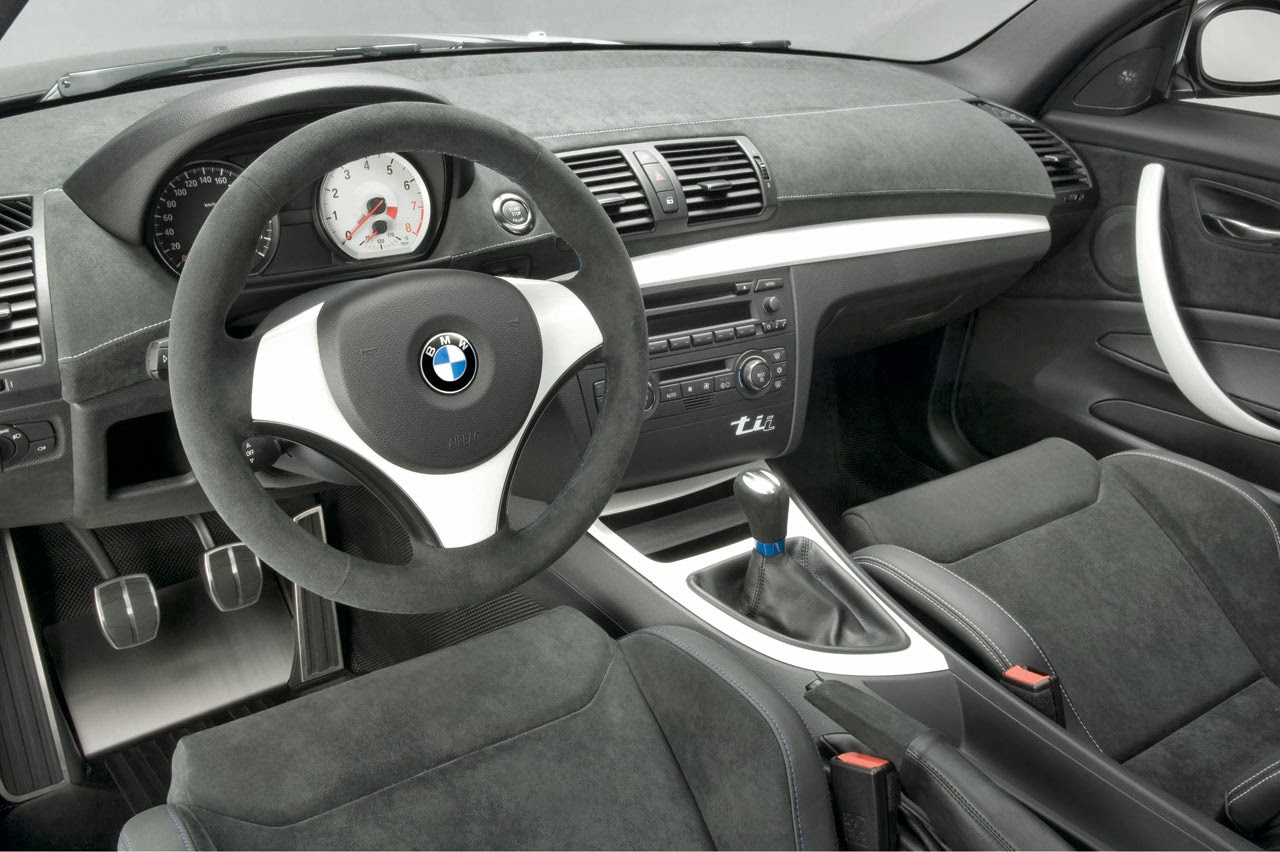
The seats are low, so you slide down into them. Once seated in the particularly sporty driver’s seat (it has adjustable bolsters and thigh support), you’ll see a typical BMW dashboard that’s dominated by a smart-looking 8.8-inch screen on the centre console. Build quality, as expected, is almost faultless and the driving position, as is with all BMWs, is spot on. The problem, then, is that the 1-series’ dash doesn’t feel special like a Merc A-class cabin does. There’s also precious little storage space in the centre console, although the door pockets are generous. Our test car didn’t have powered seats or electric steering adjustment, but there was still quite a bit of kit on offer, including a lane-departure warning system and a rear-end collision warning system. We don’t think the last two will make it to India though. BMW is also keen to point out that the iDrive system that, once paired to your phone, lets you tweet and update your Facebook status without having to touch your phone.  
Still, if you're expecting the 1-series to be spacious, think again. It's quite cramped at the rear and the high transmission tunnel (thanks to the rear-wheel-drive layout) eats into the middle passenger's legroom. Headroom is decent though, and the bigger windows (in contrast to the A-class's thick pillars) don't make you feel as hemmed in as you would in the Merc. The 1-series has a usefully big 360 litres of boot space and the rear seats split 40:20:40, which is useful.
BMW has said that, to start with, there will be two engines on offer in India – a 136bhp, 1.6-litre turbo-petrol and a 143bhp, 2.0-litre turbo-diesel – both mated to the ZF eight-speed automatic transmission. The cars we are driving, however, have manual gearboxes and this is, at least mechanically, the only difference from what you will soon be able to buy in India. 
The initial impression of the petrol is that it is a peppy engine. The mid-range is strong, it revs rather freely to almost 7,000rpm and there’s good top-end performance to be had too. Add to that a snappy gearshift and a progressive clutch and it’s a car that is a lot of fun to drive. The only fly in its ointment is the weak bottom end. Below 1,500rpm, especially if you have to start off on a slope, you really have to slip the clutch and feed in lots of throttle to get going. This, however will be less noticeable on the automatic that we will get here. It also gets quite thrummy near the redline, so you tend to up-shift early. Do that and the engine, like most direct-injection petrols, runs smoothly and quietly.
It’s a similar story with the diesel. There’s a bit of lag you have to work around initially, after which there’s strong acceleration from an engine that will happily rev to 5000rpm. It is surprisingly quiet too and it’s like that even when you accelerate hard. Both engines are reasonably smooth, although there are some vibes from the gearlever when you rev them hard, and though they aren’t particularly quick, neither will disappoint in a straight line. More importantly, both engines offer more power than what you get in an A-class. The diesel and the petrol we drove came with selectable driving modes that alter throttle response characteristics, among other things.
The 1-series is a lot of fun to drive – the steering on both cars is quick and well weighted, and there is lots of grip. That said, there some body roll and the car tends to understeer when you drive it hard.  The diesel, as expected, feels slightly more nose-heavy than the petrol, but both have lots of grip and come alive when you drive them hard. As for the ride, a drive over German roads is no test for a suspension – they are just too smooth. Still, it does feel pliant enough save for a few jiggles over lumpy tarmac, and the relatively high-profile tyres on 16-inch rims do their part as well. Sadly, BMW will continue to offer the 1-series with run-flat tyres when it comes to India.
BMW is assembling the 1-series in India and is expected to price it at around Rs. 20-25 lakh. For that price, it’s a fun to drive and fundamentally sound car. The question is, how many of its potential customers in India will really want what the extra driving thrills it offers? It doesn't look as special as a Mercedes A-class, though, and when you're this much money for a hatch, special is what you want, isn’t it?
Fact FilePrice Range (in lakhs)*
Ex-showroom price  Rs. 22 lakh (estimated)
EngineInstallation               Front, longitudinal, RWD
Type                       1995cc 4cyl Diesel / 1598cc 4 cyl petrol
Bore/stroke             84.0/90.0mm / 77.0/85.8mm
Power                     143bhp at 4000rpm / 136bhp at 4400rpm
Torque                    32.6kgm at 1700-2500rpm / 22.43nm at 1350-4300rpm
Transmission
Type                        Front wheel drive
Gearbox                  8-speed, automatic
DimensionsLength                     4324mm
Width                      1765mm
Height                      1421mm
Wheel base              2690mm
Chassis & Body
Tyres                       195/55R16
Steering
Type of power assist    Electromechanical
BrakesFront                         Discs
Rear                          Discs
Anti-lock                   Yes

Kawasaki Ninja ZX-14R review (Test Ride)

Kawasaki launched its Ninja ZX-14R at the Tokyo motor show in 2005, replacing the outgoing ZX-12R at the time. Ever since, the big Ninja has won many hearts, going on to become a hot favourite with biking enthusiasts the world over.

The ZX-14R is a purpose-built machine, a sports-tourer that aims to give the rider a powerful sportsbike feel, without making much of a compromise on comfort, as is required for sustained long-distance riding. Apart from this, the ZX-14R has a fierce reputation, being ranked amongst the fastest production motorcycles on the planet, and having earned itself a number of accolades while tearing up the tarmac at drag strips. 
The Ninja ZX-14R is a massive, macho looking motorcycle, its nose housing a set of aggressively styled twin headlights, placed on either side of a V-shaped ram-air duct. The big Ninja provides riders an analogue speedometer and tachometer, along with a digital display with odometer, twin trip meters, range, engine and outside temperature, plus more. You can also select your power mode and traction control level from here. There’s a bulbous 22 litre fuel tank that offers adequate inner thigh support. The ZX-14R comes with a single-piece, broad riding saddle that kept us comfortable even when riding the big bike long distances. The ZX-14R sports an exposed drive chain. Its tail comprises a V-shaped LED taillight and clear lens turn signal indicators. 
At the heart of the big Ninja sits its four-stroke, 1441cc, liquid-cooled, in-line, four-cylinder engine, which relies on Kawasaki’s ram-air system for added power at high speeds. The ZX-14R generates a massive dose of 210bhp at 10,000rpm, with equally fearsome peak torque output, 16.57kgm at 7500rpm, driving its beefy rear wheel. The ZX-14R runs like a sedate, very normal street going motorcycle if you ride it with a light, sensible hand on the throttle. It’s smooth and vibe free, and feels deceptively docile for a bike that packs acceleration credentials to literally blow away most rival superbikes. The rider has the option of selecting a pair of power modes, namely Full and Low, which restricts power by upto 25 percent high in the rev band. 
Kawasaki have also given the option of a 3-level traction control system, 1 and 2 doing a good job when riding in the dry, with wheelie control, while level 3 is best left for wet riding conditions. Although we didn’t have the opportunity to check how well the system works on a wet road, we experienced the big Ninja’s electronics stepping in to cut power even under light throttle input when cornering at low speeds in the dry, under 60kph, with the traction control set to level 3. 1 and 2 offer a more involving ride, the rider having to put in a lot more concentration to keep the big Ninja from laying down large darkies, which are easily achieved in second and third, leave aside first gear. 
The fuel-injected engine is allied to a 6-speed gearbox which shifts smoothly, with good feel via its toe shift lever. Likewise, clutch feel is fine, with the slipper function working unobtrusively when coming down hard through the gearbox and using engine braking. As expected, the 14R offers manic performance, the Ninja seldom feeling anywhere close to its limits, even though it will have most riders pushing theirs, with blistering acceleration at any point in the powerband. 
You don’t need to rev the 14R hard to come to terms with the business end of its powerband. There’s more than ample power available from low-down, just over idle in every gear, building with a massive surge, through its brutal mid-range all the way up to redline. Hook the gearbox into second with power mode set to Full, and open the gas from even as low as 30kph, shifting up the box quickly and before you know it, the big Kawasaki will have smashed past 200kph, blurring the scenery around you as it hurtles along at insane speeds. A top speed in the region of 300kph makes this a faster bike than most roads in India can handle.
The Ninja ZX-14R is held together by an alloy, monocoque frame as is now a long standing tradition for this Kawasaki flagship bike. It uses upside-down telescopic forks and a linked monoshock with strengthened alloy swingarm for rear suspension. The big Kawasaki leans its rider into the handlebars, but not quite as aggressively as its track focussed sibling, the ZX-10R, which makes this an easier bike to live with on Indian roads. The 14R is actually quite a comfortable motorcycle to pilot over long distances. The ZX-14R’s front (120/70) and rear (190/50) tyres offered good traction, as they strained through our test ride to keep up with the immense power the bike lays down through its rear wheel. The long wheelbase provided ample stability, whether riding at high speeds or negotiating corners confidently on the big Kawasaki. Don’t however expect sharp point and shoot handling from the 14R, which feels more a heavy, stable but neutral steering bike when leaned through corners. The ZX-14R comes equipped with twin 310mm petal discs upfront and a single 250mm unit at the rear, with ABS offered as standard in India. 
The Ninja ZX-14R comes into India via the CBU import route. Kawasaki has priced this flagship motorcycle at Rs. 16.9 lakh (ex-showroom, Pune) here and currently only sells through a single dealership, in Pune. More detailed ride report coming soon.
Fact File
Price Range (in lakhs)*
Ex-showroom price  Rs. 16.9 lakh (ex-showroom, Pune)
Engine
Type                  1441cc, inline-four-cylinder, liquid-cooled, four-stroke
Power                  210bhp at 10000rpm
Torque                 16.57kgm at 7500rpm
TransmissionType                    6-speed, 1-down, 5-up
DimensionsLength                  2170mm
Width                     770mm
Height                   1170mm
Wheel base          1480mm
Chassis & Body
Weight                  268kg
Wheels                   10-spoke alloy
Tyres                    120/70 x 17 (f), 190/50 x 17 (r)
Suspension
Front                      USD forks
Rear                       Linked monoshock, alloy swingarm
Brakes
Front                      310mm petals discs (ABS)
Rear                       220mm petal disc (ABS)
Economy
Tank size                22 litres

Triumph Bonneville review (Test Ride)

When Triumph rose from its ashes 21 years ago, the last thing its brand-new owner John Bloor wanted to be associated with was a standing air-cooled twin.

It was not until ten years later when Triumph had convincingly made clear that English motorcycles were no longer synonymous with unreliability and oil stains on the sidewalk that it dared to introduce a contemporary version of the legendary Triumph Bonneville. Still, there was no guarantee for success by any means. Now this important bike, ranked amongst the most iconic models in motorcycling history, is about to be introduced to the Indian market. If you were to take a vote for the most famous motorcycle name ever, you could count on Triumph’s Bonneville to be a strong contender. The original Bonneville made its first appearance back in 1959 when it was introduced at the Earls Court Motorshow. True to form, the most classic of all Triumphs derives its name from the salt plains at Bonneville in the American state of Utah.   
In no time, the 650cc parallel twin, with its 46bhp output and four-speed gearbox, became hugely popular, and rightly so. Today, one out of two Triumphs sold worldwide is a Bonneville or one of its derivatives (T100, SE, Thruxton or Scrambler).
 
Since its magnificent comeback in 2000, the ‘new Bonneville’ has evolved drastically. Right from the start, Triumph had injected the inspired vintage look with modern technology, but in 2005 capacity went up from 790cc to 865cc and the power output increased to 67bhp from 61. The Bonneville features four valves per cylinder, these operated by a double overhead camshaft, in turn driven by a belt. The air-cooled twin develops 6.93kgm of torque at 5800rpm. Admittedly, it’s impossible to compare the Bonneville to current sportsbikes,  but you can spot some remains of its racing personality from back in the day. The Triumph likes to rev, not inviting you to redline all the time, but the engine has been tuned for an active riding style. Ask your dad and you will learn how standing twins carried an unenviable reputation for vibrations. Those times are thankfully gone. The Bonnie runs remarkably smoothly with virtually no vibrations.
 
Unfortunately, this refined engine isn’t coupled to the gearbox it deserves, with shifting down not feeling without glitches and neutral proving a bit tough to find at times. Sitting on the Triumph is an interesting experience. Compared to the very low seat the Bonneville had earlier, the 790mm seat is a bit higher, but still more than okay for shorter people. Typically, the Bonnie encourages the feeling of sitting ‘inside’ the motorcycle. The Triumph tips the scales at 225kg of kerb weight. The low centre of gravity, 1490mm wheelbase and 17-inch wheels work beautifully together to ensure great handling. Pointing the Triumph in the right direction is no sweat; quite the contrary in fact, because the Bonneville corners effortlessly, behaving very neutral and heading flawlessly into whichever direction you have in mind. Last-minute corrections when your head is slightly off-course are a piece of cake. The Triumph always feels secure, both in fast and slow situations, and we also like its handlebar position.
 
The suspension of the Bonneville is quite firm and sporty. Quite simply, Triumph’s retro naked motorcycle inspires confidence and remains tight even on very twisty and challenging roads. On bad roads, as are so common in India, you pay the price for excellent handling, which is reduced comfort. Also Bonneville-typical, there’s no need to fiddle around to get better performance out of the bike like Joe Bar and his counterparts needed to in the Sixties or Seventies. Yes, the British bestseller looks a classic, but under its skin it’s pretty sophisticated. One can imagine how riders used to curse their spongy brakes in the era of the original Bonneville. Anno 2013, the Bonneville now has plenty of stopping power thanks to a 310mm front disc with Nissin twin-piston-caliper brakes. At the rear, the Triumph is equipped with a capable 225mm rear disc, with dual-piston caliper.
 
Thanks to electronic fuel injection, the Triumph is also up to date when it comes to fuel economy; during our test we averaged 18.9kpl. In reality, this gives the Bonneville a usable range of over 250km. Although you’ll find much better rivals if you want pure performance, our test would remain incomplete without a thorough speed check. The Bonnie behaves terrific up to 190kph, but that’s also where the story ends, because it doesn’t have a lot more to give beyond that. Ideal cruising speeds of up to 130-135kph are a given. Cruising and commuting comfortably with a Bonneville is also doable. The metal tank offers the possibility to attach a tank bag, and Triumph offers a wide range of accessories to customize your bike with. 
 
Whether the Bonnie is really made for you or not depends a lot on your taste and your individual riding style. In any case, count on the Triumph Bonneville to give you the pure and essential flavour of motorcycling. So even if the vintage theme goes only skin deep, the new Bonneville will evoke sensations that make it every inch a true classic for India, all while maintaining a very attractive price point. The Bonneville launches in India Nov 28, at an expected price point of around Rs. 6 lakh, and its Thruxton variant is also tipped to be India bound, a sporty Bonnie, with exciting cafĂ© racer styling.

1964 Ferrari 250 LM auctioned for record $14.3 mn in New York

A 1964 Ferrari 250 LM sold for $14.3 million at auction on Thursday.
Estimated at $12 million to $15 million, it was the top lot of Art of the Automobile, the first car auction in Manhattan in more than a decade. Organized by Sotheby’s and RM Auctions, it offered 34 trophy vehicles. The auction tallied $62.8 million, exceeding the presale estimate of $50 million; of the 41 offered lots, only three failed to find buyers. The winning bidder was on the telephone, represented by RM specialist Ian Kelleher.
While the 250 LM price smashed the record of $6.9 million for the model, it fell short of the top price for the marque: a 1963 Ferrari 250 GTO racer became the world’s most expensive car, selling for $52 million privately. The salesroom was packed, with the elevators full and champagne flowing at 2pm.
“It was a big experiment,” said Rob Myers, founder and chief executive officer of RM Auctions, which has headquarters in Ontario, Canada. “The results rank among the top four auctions we’ve ever had,” Myers said, sipping Budweiser after the sale.
The red Ferrari, just 44 inches (1.1 meters) tall, was designed by Carrozzeria Scaglietti, on chassis number 6107. Only 32 examples of Ferrari 250 LM have been produced, including the last Ferrari to win the 24-Hour race at Le Mans in 1965.
The car had been owned by Ecuadorian car racing duo as well as collectors from Japan, the UK and California. Sotheby’s, RM Auctions, or both companies had an economic interest in the lot, according to the catalog.
Car crash
The Ferrari had been parked by the entrance to Sotheby’s New York headquarters before moving up to the 10th floor for the exhibition this week. Other Ferraris, Bugattis and Cadillacs were exhibited on the same space where Andy Warhol’s $105 million Silver Car Crash and hedge-fund billionaire Steven A. Cohen’s art trove hung last week.
The auto exhibition attracted between 1,200 and 1,500 visitors a day, one of the highest attendance rates for Sotheby’s, the auction house said.
An Art Deco-inspired, cream-coloured 1938 Talbot-Lago cabriolet made by French coachbuilders Figoni et Falaschi fetched $7.15 million with fees, against the estimate range of $8 million to $10 million. This beat the previous best for a Talbot-Lago of $4.8 million. The prices include a buyer’s premium; the estimates don’t.
Lincoln fails
The biggest casualty was a 1955 orange Lincoln made by Italian coachbuilder Felice Mario Boano. Estimated at $2 million to $2.5 million, it stalled at $1.5 million.
“There were ups and downs,” said Marcel Massini, a Swiss- based Ferrari historian, who attended the auction. “At this price level, the air is very thin.”
A Maserati A6G/2000 Spyder from 1955 with coachwork by Carrozzeria Zagato sold for $4.5 million, against an estimate of $3.5 million to $4.5 million.
A 1959 Ferrari 250 GT SWB Competition Berlinetta Speciale, a dual-purpose sports racing coupe with bespoke coachwork by Bertone, fetched $7 million, within the presale estimate range. It was the third priciest lot of the sale.

Sachin Tendulkar thanks all who made his life as a cricketer possible

Mumbai: 

An emotional Sachin Tendulkar had a long list of people to thank for supporting him through an illustrious 24-year career. In front of a packed Wankhede crowd, the legendary player - tears clearly visible in his eyes - bid farewell.


On his father:

The most important person in my life and I have missed him a lot since 1999. Without his guidance, I wont have been standing here before you. He gave me freedom since 11. He told me to be a nice human being. Every time I have done something special, I have raised my bat for my father.

On his mother:

I don’t know how she dealt with such a naughty child like me. She must be patient. My mother took care of me. She started praying for me before I started playing cricket and she kept praying, praying and praying. A big thanks to her for all the sacrifices.

On his siblings:

My eldest brother Nitin and his family have always supported me. He said whatever you do, I know you will give a 100 per cent.

My first cricket bat - a Kashmir willow - was presented by my sister. She is the one who continues to fast when I bat. So thank you Savita.

I don't know what to talk about Ajit. We have lived this dream together. He sacrificed his career, he spotted the spark and took me to Achrekar sir and my life changed. He called me last night and we were discussing my dismissal. That's the rapport we have developed since my birth. We agreed on various things as for my techniques and many times I didn't agree with his view. Now I think I would have been a lesser cricketer had I not had him.

On his wife:


Most beautiful thing happened to me in 1990 when I met my wife Anjali. Those were the most wonderful years. Being a doctor, there was a wonderful career ahead of her. She told me when we wanted to have a family that I should concentrate on cricket and she will take care of everything. Thanks for being there. You are the best partnership I have had in my life.

On his children:

I wanted to spend so much time with Sara and Arjun on their birthdays, annual days, sports days. I missed out on all of these. Thanks for understanding. For 14 and 16 years, I did not spend enough time. I promise you  I will make it up.

On his childhood friends:

My childhood friends have had a terrific contribution. They left all their work aside when I asked them to bowl at the nets, join me on holidays, help me concentrate. Friends woke up at 3am when I was injured and reassured me that my career was not over. Life would have been incomplete without them.

On his first coach:

My cricket career started when I was 11. Turning point of my career was when Ajith took me to Achrekar sir. I was extremely delighted to see him in the stands (today). On a lighter note, he never said 'well played' in the last 29 years because he thought I will become complacent. Sir, now I have played my last but cricket will always be in my heart.

On former cricketers who inspired him:

Thanks to all senior cricketers and I have high regards for all of them.

On colleagues and the players in the current Indian team:

We see them on the giant screen – Sourav, VVS, Kumble who isn't here and my team members. I have had wonderful years with you. It is going to be hard not to be with you and share the dressing room. I know you will continue to serve the nation in the right spirit and right values. I believe we were the lucky ones to have been chosen by the almighty. I have full faith in you that you will serve the nation and bring all the laurels to the country. All the best.

On those who helped him stay fit:

Would like to thank all the doctors, physios to get this body together Without your special efforts, it won’t have been possible. I have called them at weird hours, they have taken flights at odd hours to help me stay fit.

On fans:

I want to thank all the people here and from various parts of the world. You have meant a lot to me.